
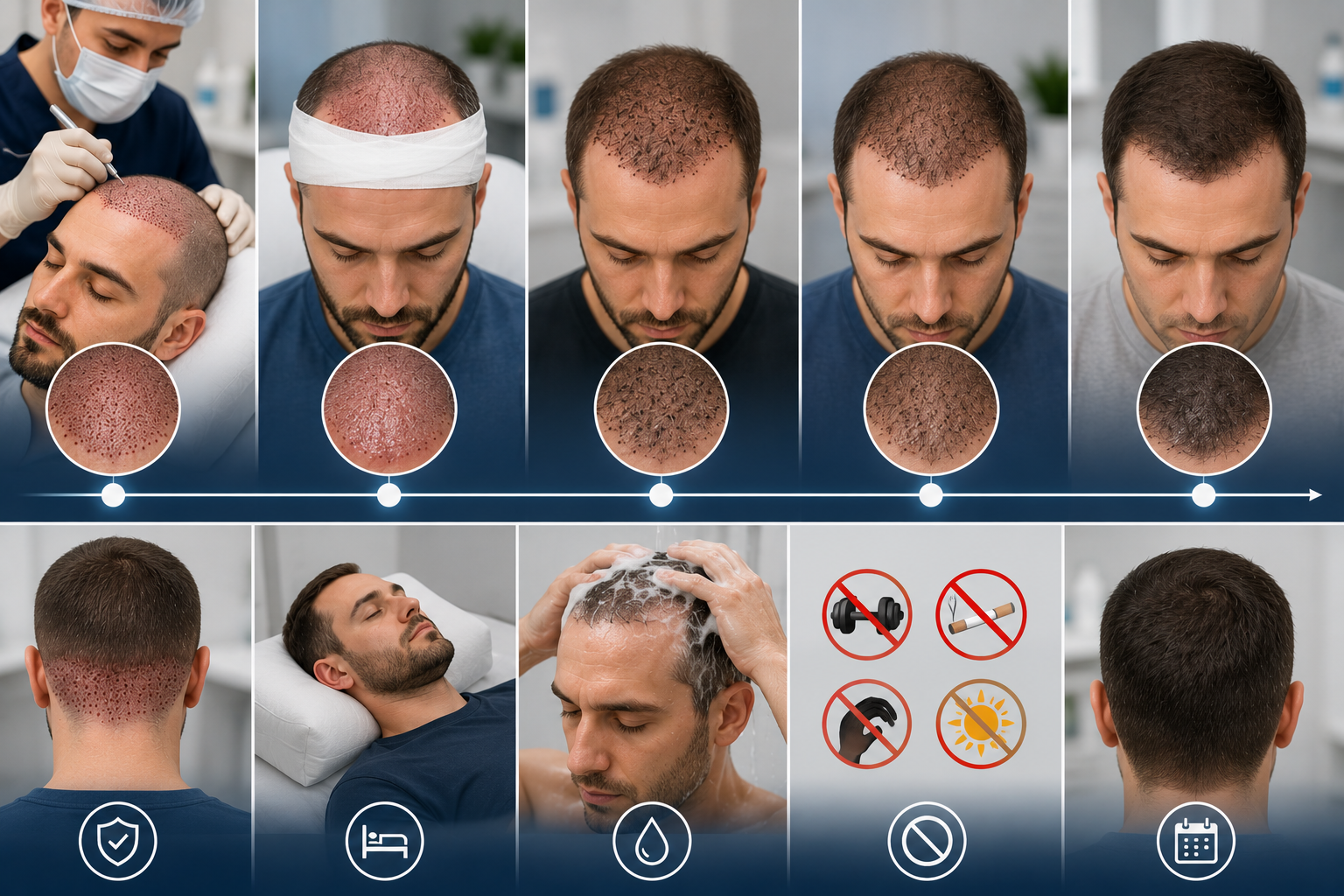
It is normal for patients to have questions about washing, sleeping, swelling, scabbing, exercise and returning to daily activities. Knowing what to expect can make the recovery period more comfortable and help you follow the recommended aftercare routine correctly.
Although recovery varies from person to person, having a general understanding of the first 10 days can help you prepare for the healing process.
What Happens Immediately After a Hair Transplant?
Immediately after the procedure, the scalp may appear red and slightly swollen. Tiny scabs or small crusts may also develop around the transplanted follicles.
Some patients experience mild tenderness, tightness or sensitivity in the treated areas.
These effects can be part of the normal healing process. Your clinic should provide specific post-operative instructions based on the procedure performed and your individual condition.
Day 1: Protecting the Transplanted Area
The first day is mainly about protecting the newly transplanted follicles.
The scalp should generally be left undisturbed unless your medical team has instructed otherwise. Touching, scratching or rubbing the treated area should be avoided.
Your clinic may provide specific instructions regarding:
Medication
Sleeping position
Washing
Protective products
Swelling management
Activities to avoid
Following these instructions carefully is an important part of recovery.
Day 2–3: Swelling and Sensitivity
Some patients may experience swelling during the first few days, particularly around the forehead or upper facial area.
The scalp may also remain sensitive.
Swelling can vary considerably between individuals. Sleeping with the head elevated may sometimes be recommended by the medical team to help minimize discomfort and swelling.
Do not apply ice or other products directly to the transplanted area unless your medical team specifically advises you to do so.
How Should You Sleep After a Hair Transplant?
Sleeping carefully is important during the first few days.
Many clinics recommend keeping the head elevated and avoiding direct pressure on the transplanted area.
A clean pillow and a comfortable sleeping position can help reduce unnecessary contact with the scalp.
Your clinic should provide specific sleeping instructions based on your procedure.
Washing the Scalp After a Hair Transplant
Patients are often concerned about washing their hair after transplantation.
In many cases, gentle washing is introduced according to a schedule provided by the clinic. The exact timing and technique can differ depending on the procedure and the medical team's protocol.
When washing is permitted, patients are generally advised to avoid aggressive rubbing or scratching.
The scalp should be handled gently, and any recommended shampoo or cleansing method should be used according to the clinic's instructions.
Day 4–5: Scabs Begin to Form
During these days, small scabs around the transplanted follicles may become more noticeable.
This can be a normal part of healing.
It is important not to pick or remove scabs forcefully. Allowing the scalp to heal naturally can help avoid unnecessary irritation.
Your clinic may provide specific instructions for keeping the area clean and managing the scabs.
Day 6–7: The Scalp Continues to Heal
By the end of the first week, many patients notice that redness and swelling have started to decrease.
The scalp may still have small scabs or areas of sensitivity.
Some patients feel comfortable returning to normal work during this period, particularly if their work is not physically demanding.
However, the appropriate return-to-work time depends on the individual and the type of procedure performed.
Day 8–10: Moving Toward Normal Routine
During the second part of the first 10 days, the scalp generally continues to settle.
The transplanted area may still look different from normal because of residual redness, small scabs or short transplanted hairs.
This does not represent the final result.
The follicles need time to go through their natural growth cycle before visible new hair development occurs.
Can You Exercise After a Hair Transplant?
Exercise restrictions vary depending on the procedure and your clinic's instructions.
Intense physical activity can increase sweating and may put unnecessary stress on the scalp during the early recovery period.
For this reason, patients are often advised to avoid strenuous exercise for a certain period after treatment.
Your medical team should determine when it is appropriate for you to resume specific activities.
Can You Touch the Transplanted Hair?
During the early recovery period, unnecessary touching should generally be avoided.
The newly transplanted area should be handled gently and only according to the instructions given by your clinic.
Scratching, rubbing or picking at scabs can irritate the scalp and interfere with proper healing.
What Should You Avoid During the First 10 Days?
The exact restrictions vary, but patients may be advised to avoid:
Scratching or rubbing the scalp
Picking scabs
Strenuous exercise
Activities that cause excessive sweating
Direct pressure on the transplanted area
Excessive sun exposure
Swimming or activities involving untreated water
Wearing tight headwear unless approved by the medical team
Always follow the specific instructions provided by your hair transplant clinic.
Is Redness Normal After a Hair Transplant?
Some degree of redness can occur after a hair transplant, particularly around the treated areas.
The duration and intensity can vary depending on skin type, treatment size and individual healing.
If redness becomes increasingly severe or is accompanied by symptoms that concern you, contact your medical team for professional advice.
What About Shock Loss?
Some transplanted hairs may shed during the weeks following the procedure.
This temporary shedding is commonly known as shock loss.
Although it can be alarming, shedding does not necessarily mean the transplant has failed. The hair follicle can remain in the scalp while the visible hair shaft sheds.
New hair growth usually takes time and does not occur immediately after transplantation.
When Will You See New Hair Growth?
The first 10 days are far too early to judge the final result.
Hair growth generally develops gradually over the following months.
Many patients begin to notice new growth after several months, while fuller results continue to develop over a longer period.
The exact timeline varies according to individual factors.
When Should You Contact Your Clinic?
Your medical team should explain which symptoms require attention.
You should contact your clinic if you experience unexpected or worsening symptoms, significant pain, signs of infection, unusual bleeding or any other concern that does not seem consistent with the recovery instructions you were given.
Do not rely on online information to diagnose a complication.
Frequently Asked Questions
Can I wash my hair during the first 10 days?
Washing is generally introduced according to the clinic's instructions. The timing and method can vary, so follow the specific washing protocol provided by your medical team.
Can I return to work after a hair transplant?
Some patients return to non-physical work within several days, but the appropriate timing depends on the procedure, recovery and type of work.
Can I sleep normally after a hair transplant?
You may need to modify your sleeping position during the first few days to reduce pressure on the treated area. Follow your clinic's instructions.
Can I wear a hat after a hair transplant?
Whether and when you can wear a hat depends on the type of hat and the instructions from your medical team. Avoid anything that puts pressure or friction on the grafts unless approved.
Are scabs normal?
Small scabs can be part of the normal healing process. They should not be forcibly removed.
Final Thoughts
The first 10 days after a hair transplant are focused primarily on protecting the scalp and allowing the transplanted follicles to settle.
Mild redness, swelling, sensitivity and scabbing can occur during this stage. Careful washing, avoiding unnecessary contact and following professional aftercare instructions are key parts of recovery.
Most importantly, do not judge your final hair transplant result during the first few days. Hair restoration is a gradual process, and visible growth develops over the following months.
If you have any concerns during your recovery, contact your hair transplant clinic rather than trying to manage unexpected symptoms on your own.
Important: Hair transplantation is a medical procedure. This article is intended for general educational purposes and does not replace individualized medical advice or post-operative instructions from your healthcare professional.