
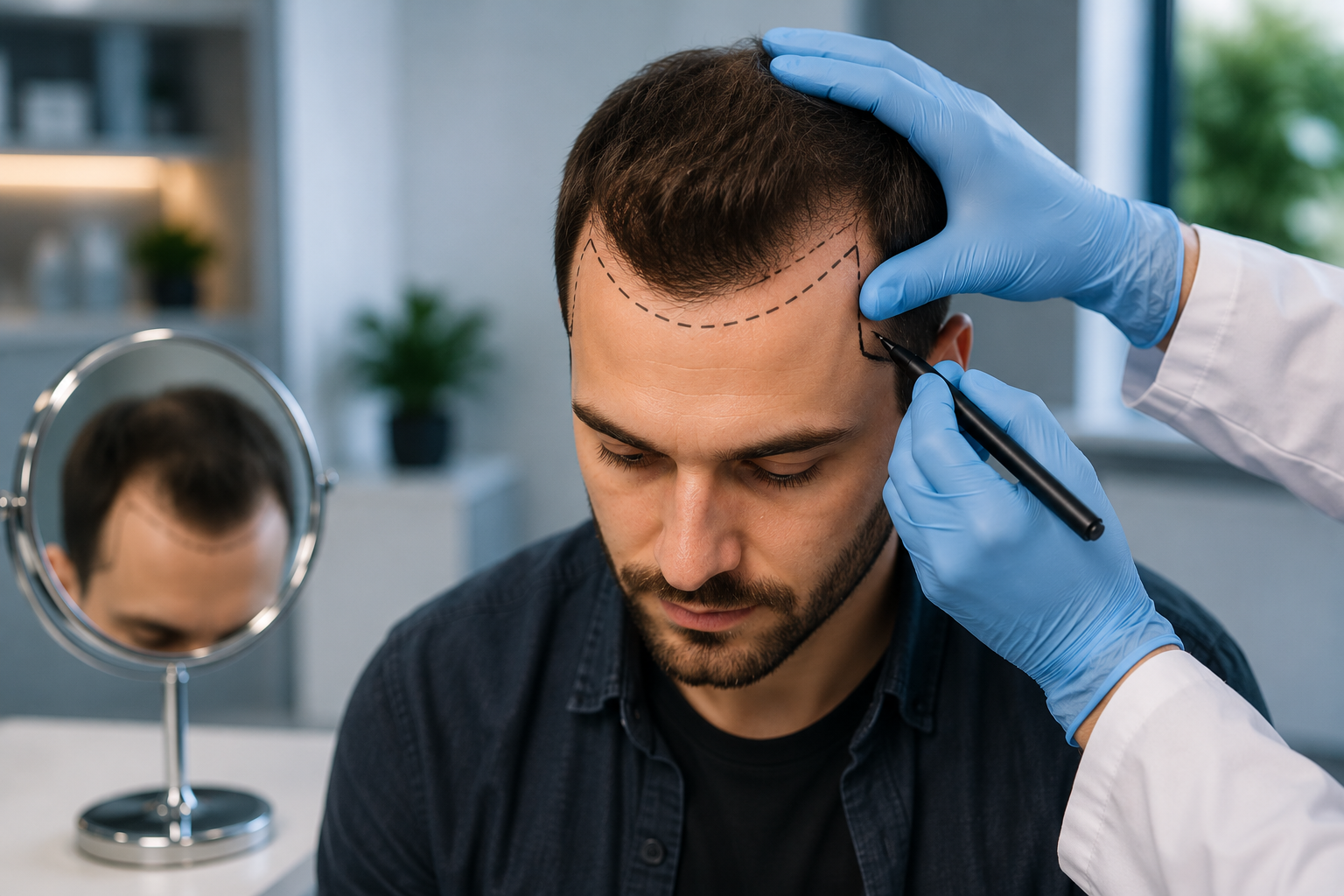
However, a hair transplant is not suitable for everyone. Several factors should be evaluated before deciding whether the procedure is appropriate. Understanding these factors can help patients have realistic expectations and make a more informed decision.
What Makes Someone a Good Candidate for a Hair Transplant?
A good hair transplant candidate generally has sufficient healthy hair follicles in a suitable donor area and a type of hair loss that can potentially benefit from transplantation.
During a consultation, a specialist may evaluate:
The pattern and extent of hair loss
The density of the donor area
The quality and characteristics of the hair
The condition of the scalp
The patient's age
The progression of hair loss
Previous hair restoration procedures
General health and medical history
The patient's expectations and treatment goals
A personalized assessment is essential because every patient's hair loss pattern is different.
Is There a Minimum Age for a Hair Transplant?
There is no single age that is considered appropriate for every patient.
Hair loss can continue to progress over time, particularly in younger patients with androgenetic alopecia. Performing a transplant too early without considering future hair loss may make long-term planning more difficult.
For this reason, specialists generally assess the stability and progression of hair loss rather than relying solely on the patient's age.
A treatment plan should take both current hair loss and potential future changes into consideration.
Does the Cause of Hair Loss Matter?
Yes. Identifying the cause of hair loss is one of the most important steps before considering a hair transplant.
Hair transplantation is commonly considered for permanent pattern hair loss, including male pattern hair loss and certain cases of female pattern hair loss.
However, hair loss can also be related to other factors, such as certain medical conditions, hormonal changes, nutritional deficiencies, medications or scalp disorders.
If the underlying cause has not been identified, a medical evaluation may be recommended before considering transplantation.
Why Is the Donor Area Important?
The donor area is one of the most important factors in hair transplantation.
Healthy follicles are typically taken from areas such as the back and sides of the scalp because these follicles may be more resistant to the effects of pattern hair loss.
The available donor supply is limited. Therefore, careful planning is necessary to avoid overharvesting the donor area.
A qualified specialist should determine how many grafts can reasonably be extracted while maintaining a natural appearance in the donor area.
Can People With Advanced Hair Loss Have a Hair Transplant?
People with advanced hair loss may still be candidates in some cases.
However, the available donor hair, the size of the recipient area and the patient's expectations become particularly important.
When the area requiring coverage is large and donor density is limited, achieving very high density across the entire scalp may not be realistic.
In these situations, a specialist may develop a treatment strategy that prioritizes important areas such as the frontal hairline and central scalp.
Can Women Have Hair Transplants?
Yes. Women can also be candidates for hair transplantation.
Female hair loss can have different causes and patterns, so careful evaluation is particularly important.
Depending on the cause and pattern of hair loss, a woman may benefit from transplantation when there is an appropriate donor area and the hair follicles can be used effectively.
A detailed consultation should be performed before making a treatment decision.
What About People With Thin Hair?
Having thin hair does not automatically mean that a person is unsuitable for a hair transplant.
Hair characteristics, donor density and the contrast between the hair and scalp all influence the expected appearance.
In some cases, strategically placing grafts can improve the visual appearance of density. However, expectations should remain realistic, especially when the donor supply is limited.
Can Previous Hair Transplant Patients Have Another Procedure?
Some patients may undergo a second hair transplant.
A second procedure may be considered when additional density is required, when hair loss has progressed, or when a previous procedure did not produce the desired result.
However, the condition of the donor area and the previous extraction pattern must be carefully evaluated before another procedure is planned.
What Should Expectations Be?
Realistic expectations are one of the most important parts of a successful hair restoration journey.
A hair transplant can improve hair coverage and create a more defined, natural-looking appearance, but it cannot necessarily recreate the density someone had during their youth.
The final result depends on factors such as:
Donor hair quality
Number of available grafts
Hair characteristics
Extent of hair loss
Skin and scalp characteristics
Surgical technique
Healing and individual hair growth
Long-term progression of hair loss
A professional consultation should explain what can realistically be achieved based on the individual patient's characteristics.
How Is Candidacy Determined?
The first step is usually a detailed consultation.
The specialist examines the donor and recipient areas and assesses the patient's hair loss pattern. Depending on the situation, medical history and other relevant factors may also be considered.
A treatment plan can then be developed based on the patient's individual needs.
The goal is not simply to transplant the maximum possible number of grafts. Instead, the focus should be on achieving a natural result while preserving the donor area for the future.
Frequently Asked Questions
Am I automatically a candidate if I have hair loss?
No. Hair loss alone does not guarantee that a hair transplant is appropriate. Donor density, the cause of hair loss and other individual factors must be evaluated.
Is a hair transplant suitable for younger patients?
It may be suitable in selected cases, but ongoing hair loss should be considered carefully. Long-term planning is especially important for younger patients.
Can someone with very little donor hair have a transplant?
Limited donor hair can make transplantation more challenging. A specialist should assess whether sufficient follicles are available to achieve a reasonable result.
Can a hair transplant stop future hair loss?
No. A transplant moves hair follicles into areas affected by hair loss, but it does not necessarily prevent untreated native hair from continuing to thin.
How do I know which technique is right for me?
Techniques such as FUE and DHI have different characteristics. The appropriate approach depends on the patient's hair loss, donor area, hair characteristics and treatment objectives.
Final Thoughts
The best hair transplant candidates are not defined by age alone. The quality of the donor area, the cause and progression of hair loss, overall suitability and realistic expectations are all important considerations.
If you are considering a hair transplant, an individual consultation with a qualified medical professional can help determine whether the procedure is appropriate for you and what type of treatment plan may provide the most suitable result.
Important: Hair transplantation is a medical procedure. This article provides general educational information and should not replace an individual medical evaluation or professional medical advice.